Do you love watching movies in the cozy darkness of a cinema? Then a trip to the movies is a must during your stay in Berlin.
Near the EastSeven Hostel Berlin, there are several movie theaters that offer more than just a great film program. We’re happy to recommend the 5 best cinemas in Berlin-Prenzlauer Berg right here.
Kino in der Kulturbrauerei
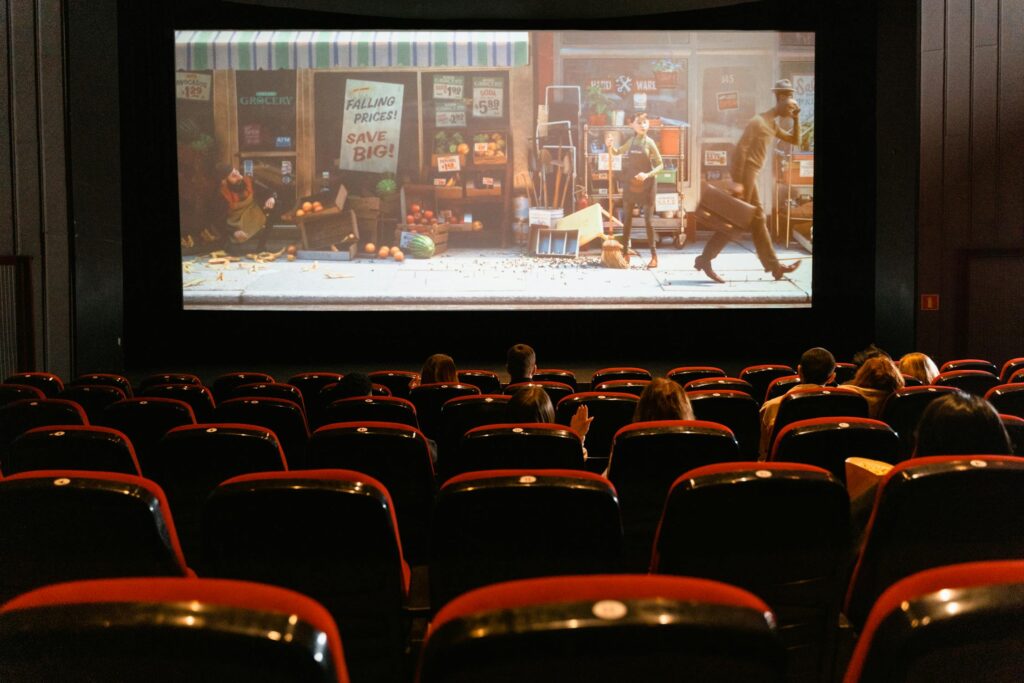
The largest movie theater in Prenzlauer Berg is the Kino in der Kulturbrauerei. It has 8 screens with a total of 1,587 seats. Due to its size, international films occasionally celebrate their premieres at this cinema.
The program is always filled with the latest films from Hollywood, Germany, and occasionally other countries around the world. Additionally, the cinema shows film history classics as part of the “Best of Cinema” series.
The Kino in der Kulturbrauerei belongs to the Germany-wide CineStar chain. That’s why events like CineLady and CineMen also take place there. There is also a “My First Cinema Visit” offer for children, featuring age-appropriate films shown with dimmed lights, reduced volume, and no pre-show commercials.
The cinema is housed in the historic Kulturbrauerei building complex. It owes its name to the fact that the site was used as a brewery starting in the 1850s. After brewing operations ended in 1967, an alternative use for the buildings was sought.
In 1991, it was decided that the complex should be used as a cultural center. Since 2000, the cinema has been part of the Kulturbrauerei, which also features two theaters, a museum, and a restaurant with an attached club on the grounds.
Address: Schönhauser Allee 36
Website: Kino in der Kulturbrauerei
Colosseum Filmtheater
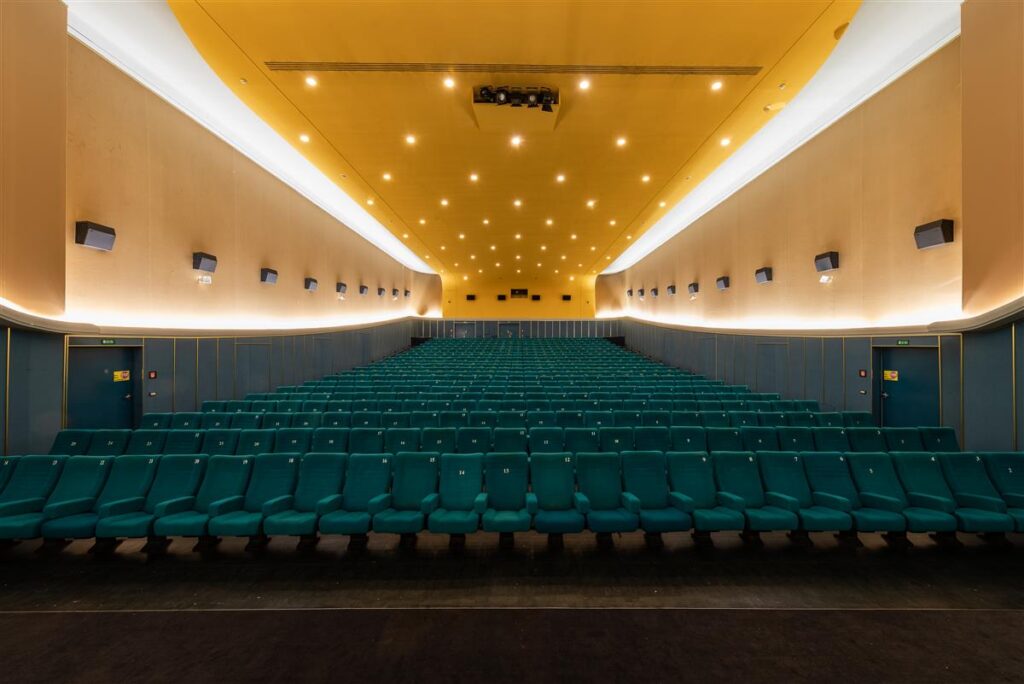
One of the most popular cinemas in Prenzlauer Berg is the Colosseum. Its 3 screens have a total of 826 seats. Screen 1, the largest, holds up to 525 people.
The weekly program consists of up to 12 films. This includes current German and US films, as well as works from other countries, independent productions, and classics from the “Best of Cinema” series.
In addition, events such as concerts, comedy shows, readings, and lectures are regularly held at the Colosseum.
The building housing the Colosseum was built as early as 1892. Among other things, it served the horse-drawn railway company as stables. From 1924 onwards, it was used for screening films.
After the Second World War, it briefly served as a military hospital and then a warming center. In 1992, the well-known film producer Artur Brauner bought the cinema.
After Brauner’s death in 2019, the Colosseum was threatened with closure. However, many residents of Prenzlauer Berg campaigned to save the cinema. In 2022, the Hamburg-based company Values Real Estate acquired the heritage-listed building and continues to operate it as a movie theater.
Address: Schönhauser Allee 123
Website: Colosseum
Lichtblick-Kino
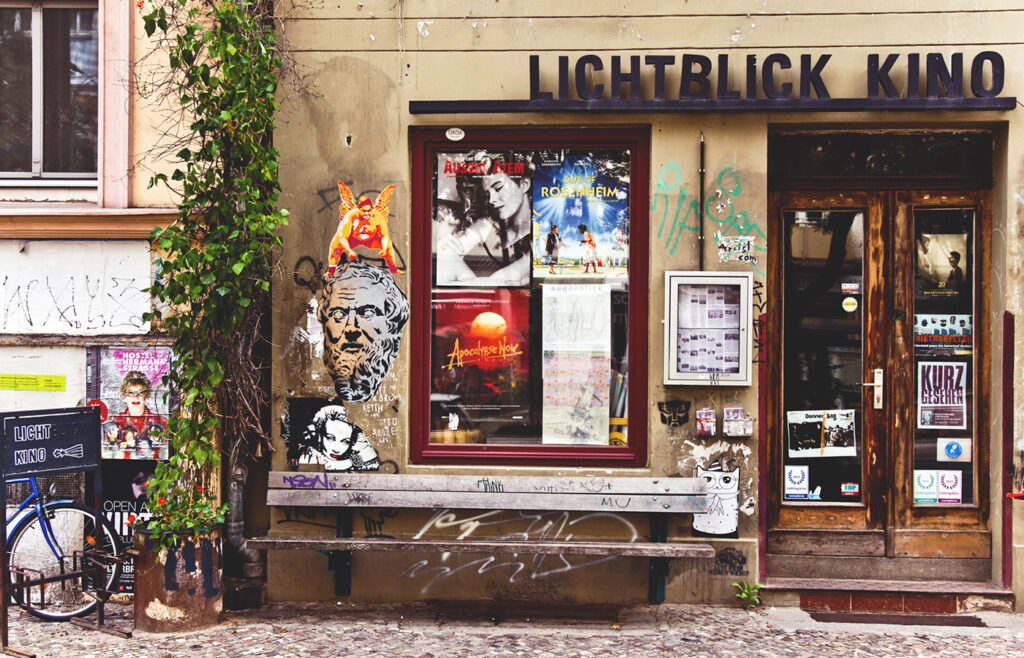
If you’re not in the mood for a blockbuster and would rather watch an offbeat film, then Lichtblick-Kino is your go-to spot in Prenzlauer Berg. The program consists mainly of arthouse, documentary, and short films, as well as classics.
Sometimes the director of a featured film is present to answer questions from the audience. At irregular intervals, Lichtblick-Kino also holds retrospectives, where several works by a specific director are shown over a certain period.
Lichtblick-Kino has won the Cinema Program Prize from the Federal Government Commissioner for Culture and the Media several times.
The cinema has only one screen, which is also very small at 50 square meters and 32 seats. This makes it the smallest movie theater in Berlin.
It is also housed in the oldest building in Prenzlauer Berg. This was built around 1852 as a residential house. Following a squatting in 1992, the house has been self-managed.
Lichtblick-Kino moved into its current premises in 1998, which previously housed a butcher shop. The tiles in the foyer are a reminder of this history.
The cinema was founded in 1994 as Stattkino Berlin e.V. and is still managed as a collective today. This included and includes many people involved in the cinema industry, such as filmmakers or cinema operators.
Address: Kastanienallee 77
Website: Lichtblick-Kino
https://lichtblick-kino.org/das-kino/
Filmtheater am Friedrichshain
Also located in a historic building is the Filmtheater am Friedrichshain. It has stood in the immediate vicinity of Volkspark Friedrichshain since 1925.
The cinema has five screens and can accommodate up to 876 people. 4K laser projection is available in Screen 1 and Screen 2. The cinema’s program features a mix of current films and independent productions.
There are also specials like the Sneak Preview, where films are shown every Monday before their official release. The catch is that as a visitor, you don’t know beforehand which film will be playing, so you’re in for a surprise.
Right from its opening in 1925, the building housing the Filmtheater am Friedrichshain was used as a movie theater. At that time, it was called the Olympia-Filmtheater and had only one screen for 1,200 visitors.
It also served as a cinema during the GDR era but stood empty for several years after the fall of the Wall. In 1995, director Michael Verhoeven acquired the building and teamed up with Yorck Kinos for the renovation. During this process, the single large screen was divided into 5 screens.
Address: Bötzowstraße 1-5
Website: Filmtheater am Friedrichshain
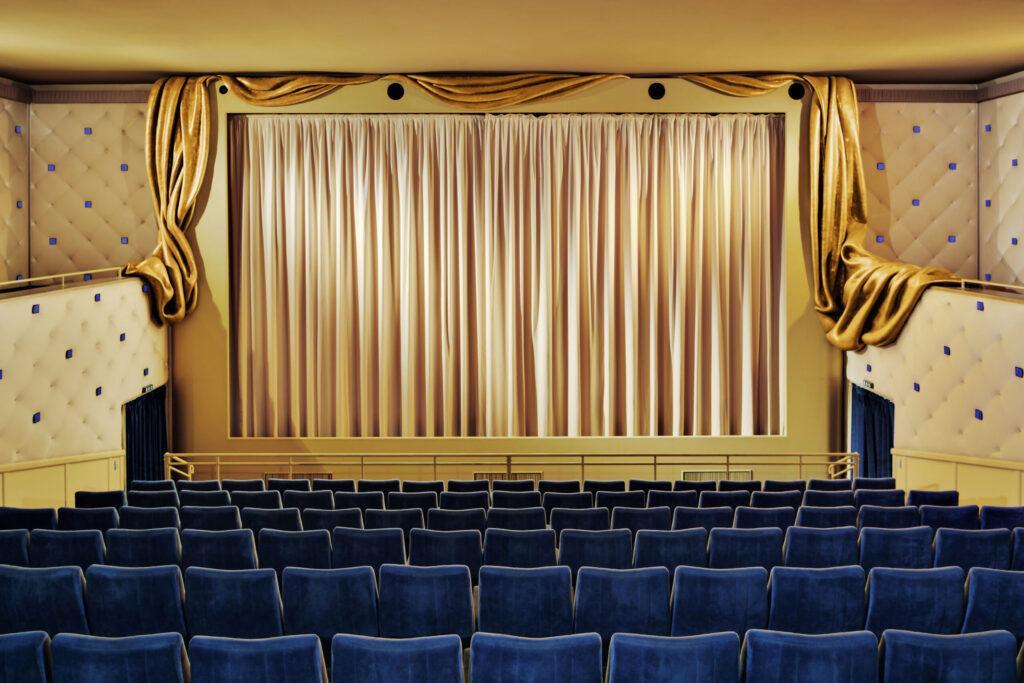
Kino Krokodil
Kino Krokodil offers an international program. It shows films from all over the world but specializes in films from Central and Eastern Europe. So if you’re interested in productions from Ukraine, Russia, or Poland, this cinema is the right place for you.
Furthermore, the films are usually shown in OmU—meaning the original version with German subtitles. Most are also older films that offer an interesting insight into historical circumstances.
Kino Krokodil has only one screen with 12 rows and 84 seats. A cinema called Nord was built into the ground floor of an existing residential building at this location as early as 1912. However, operations ceased in the 1960s.
The reopening took place in 1993, and after two changes of ownership, it has carried its current name since 2004. When you enter the foyer, you should look up for a moment. There is actually a (blue) crocodile hanging from the ceiling.
Address: Greifenhagener Straße 32
Website: Kino Krokodil
Long and rich cinema culture in Berlin
Berlin looks back on a very long cinema history. The first movie theaters opened in the capital as early as the beginning of the 20th century. Moviemento in Kreuzberg, for example, has been in operation since 1907, making it one of the oldest cinemas in all of Germany.
Thanks to the enormous variety, you have the choice between huge cinemas with thousands of seats and impressive screens where you can watch the latest blockbusters, and smaller arthouse cinemas that show more obscure productions in intimate settings.
When you’re in Berlin and staying at EastSeven, we’re happy to give you more tips on which cinemas in Prenzlauer Berg and other districts are worth a visit. And feel free to contact us in advance if you’d like to learn more about EastSeven. You can also check availability online right away.
Planning your visit? Our hostel in Berlin in Prenzlauer Berg offers central and affordable accommodation.